Leading distributed teams through a product identity crisis
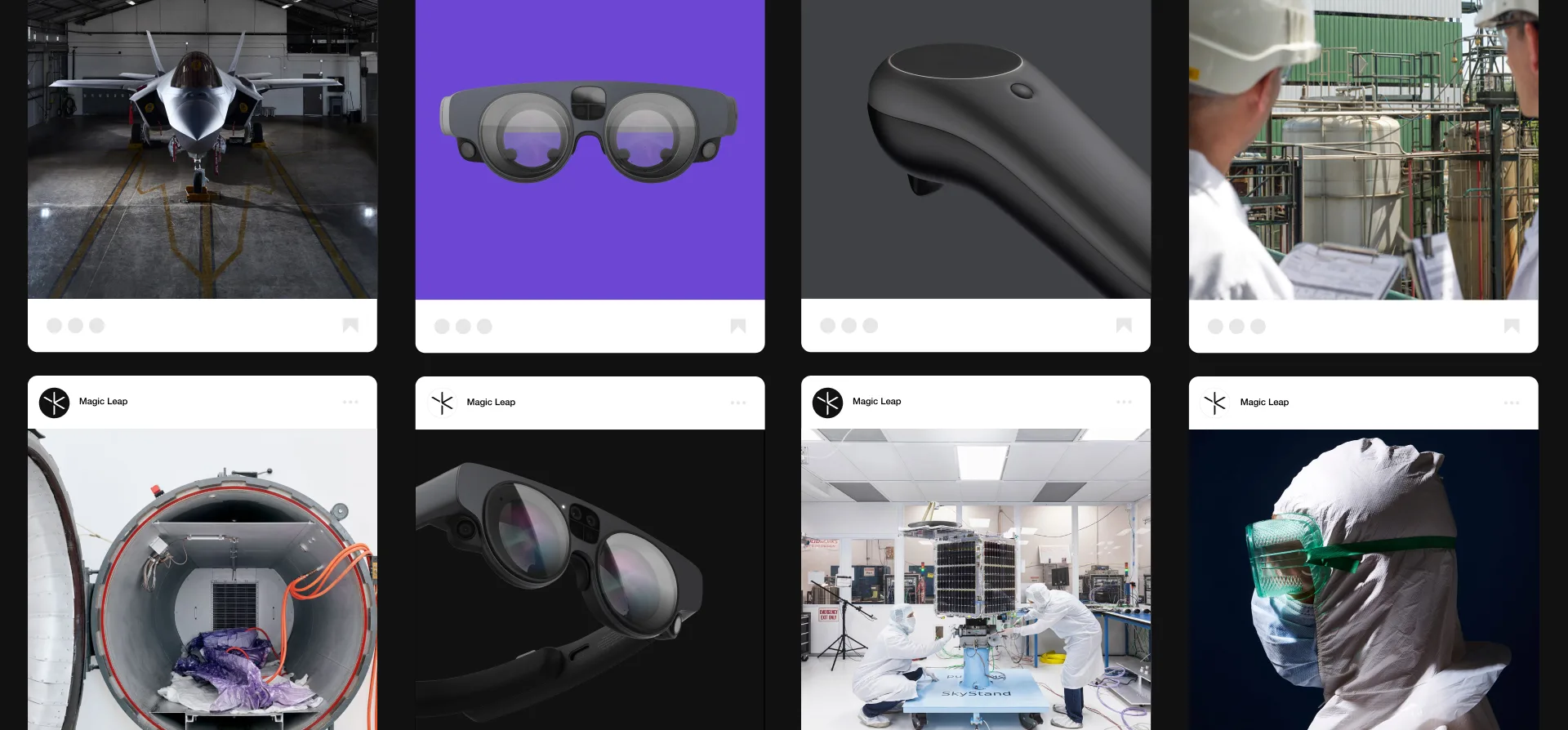
Magic Leap builds augmented reality headsets and the software that runs on them. The release of the Magic Leap 2 was the inflection point in a major business transformation, realigning the organization from consumer to enterprise markets.
For this transformation to be successful, developers need tools that allow them to put the headset to work for their end users — surgical teams, factory floors, and field engineers. As part of this business pivot, Magic Leap's developer ecosystem became one of the most critical strategic assets.
The Magic Leap Hub is the bridge. The desktop companion every developer and partner touches first when they start building for Magic Leap devices. The problem was that it wasn't ready for this transformation, and developers weren't the only ones feeling the pain.
TL;DR
A developer focused application for a discontinued consumer product, with no dedicated UX investment, now expected to carry an enterprise pivot
Staff UX Designer leading cross-functional alignment across Engineering, Developer Relations, Product, QA, and Design leadership
- UX audit — observation & opportunity analysis
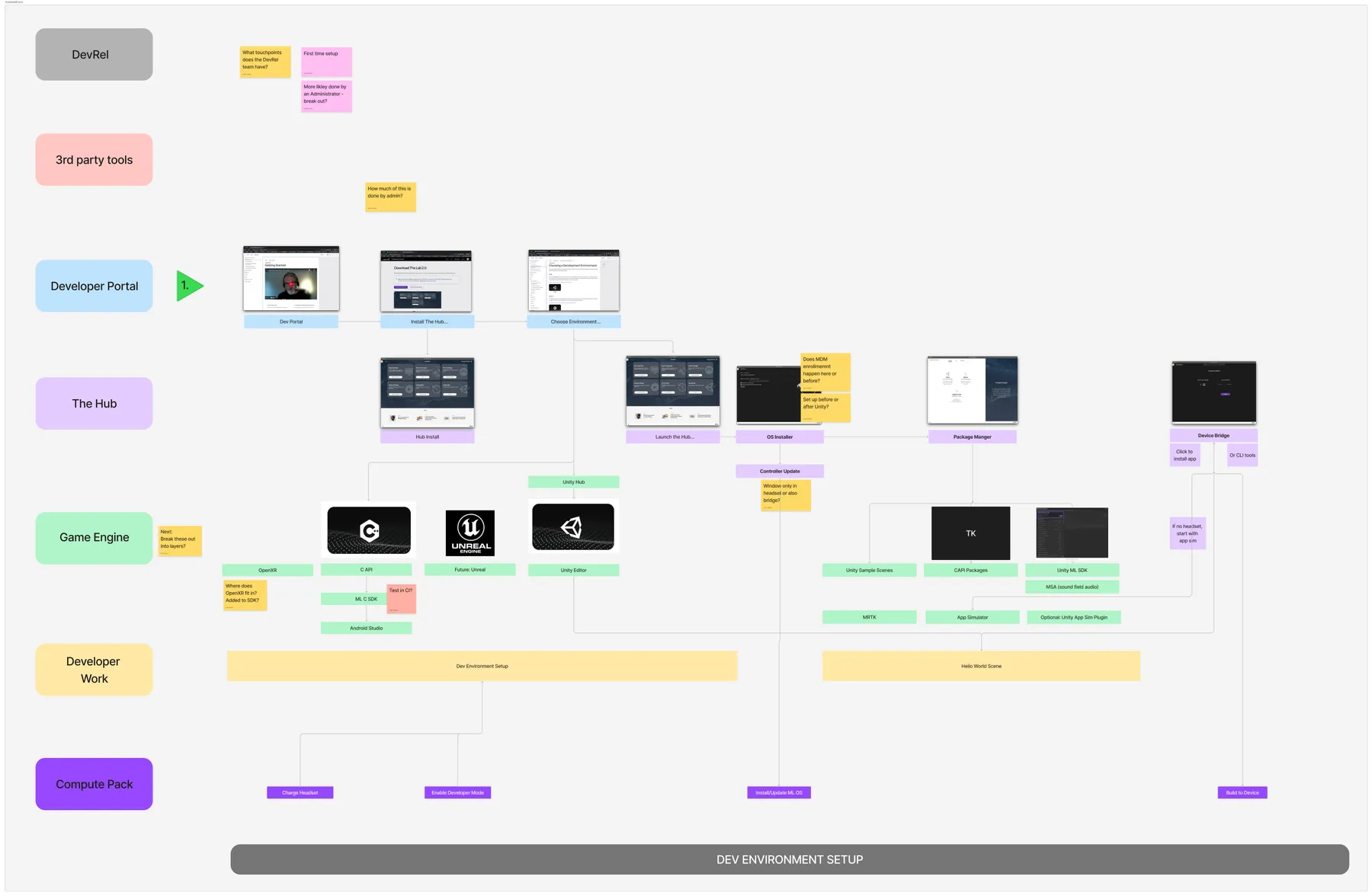
- End-to-end developer journey mapping
- Persona development
- Competitive analysis
- Discovery workshop to resolve conflicting views on where users spent time
- Shipped the redesign as Magic Leap Hub 3, with increased efficiency and stability for developers
- Reduced internal QA time, leading to faster and more reliable OS deployments
- Workshop model was adopted across the design org
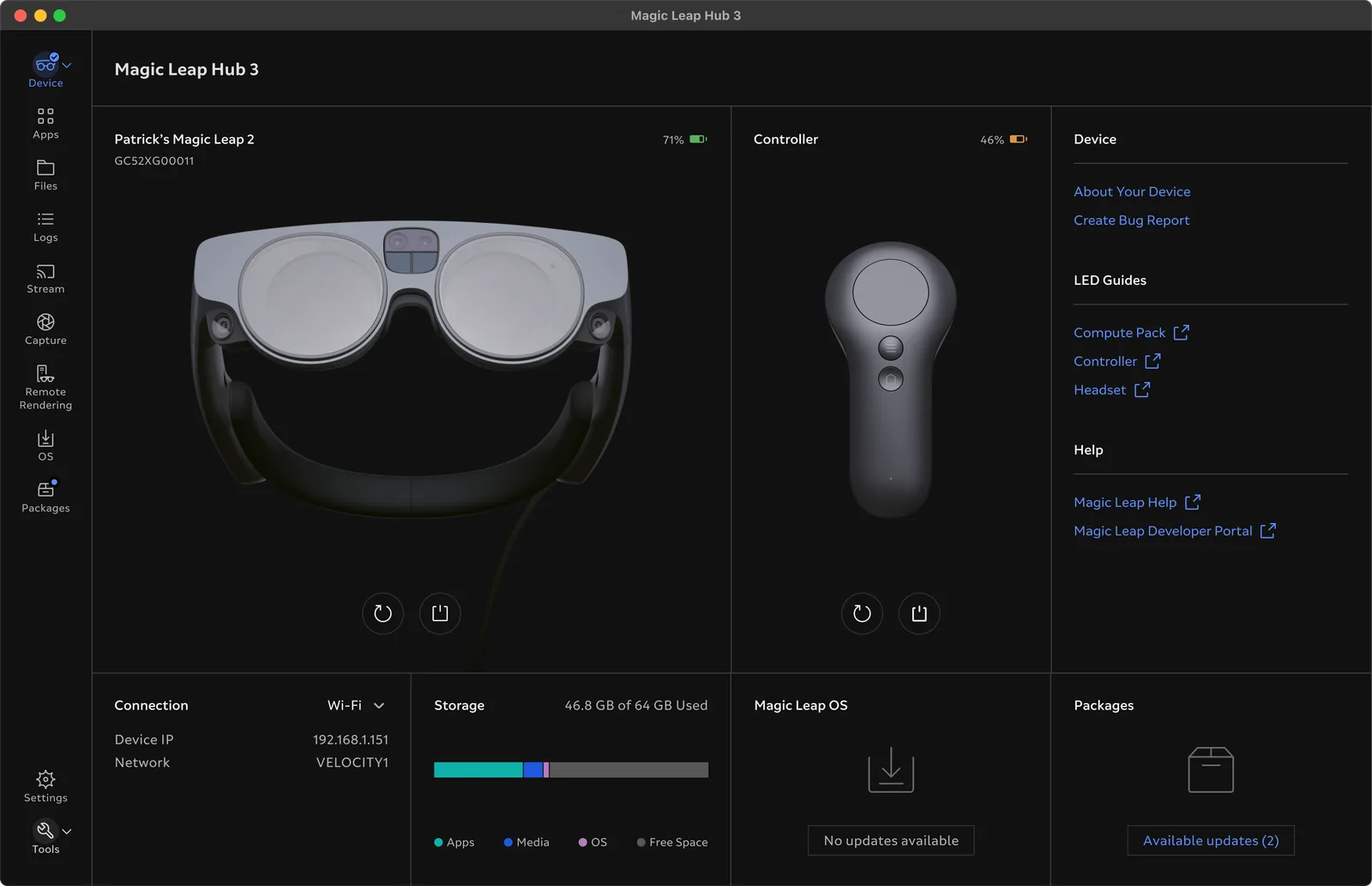
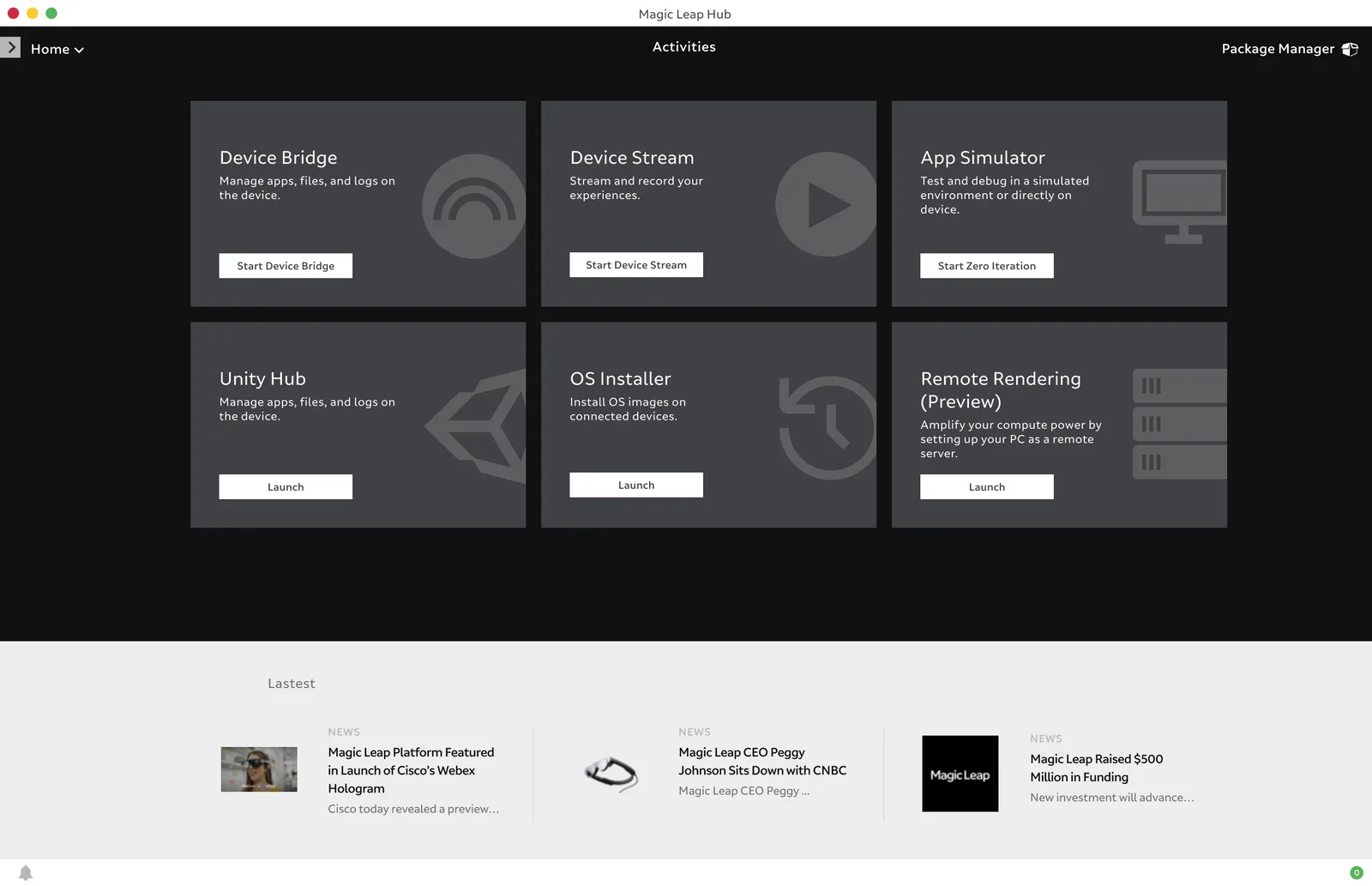 Before After
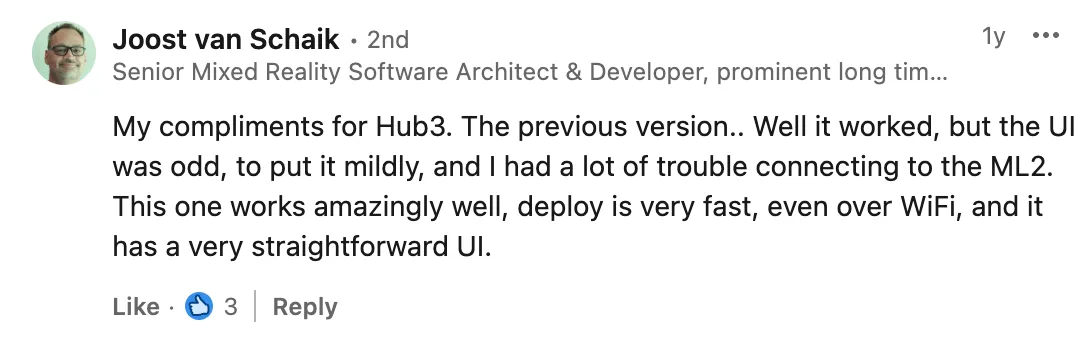
 "My compliments for Hub 3. The previous version — well, it worked, but the UI was odd, to put it mildly, and I had a lot of trouble connecting to the ML2. This one works amazingly well, deploy is very fast, even over WiFi, and it has a very straightforward UI."
Joost van Schaik, Senior Mixed Reality Software Architect
Challenges
The Hub was built for a product of the past, and a device focused on the consumer market. No dedicated UX investment had been made in The Hub since its initial launch, and no one on the design team had enterprise developer-tooling experience. I was hired, in part, to close that gap.
From a technical perspective, The Hub was a burden on Magic Leap's engineering teams. It was designed and built by a 3rd party agency using a Java backend and Magic Leap's engineering team lacked expertise in Java application development. Because of this, The Hub was costly to maintain, challenging to deploy, and impossible to modify in significant ways to accommodate new user flows required for enterprise organizations.
In order to meet these new needs, Magic Leap committed to a full rebuild of The Hub (released as Magic Leap Hub 3) using a modern, flexible tech stack and a complete redesign focusing on user-centered experiences. This was my opportunity to re-imagine The Hub's core workflows to speed up and unblock developer cycles, while introducing new experiences to support the enterprise ecosystem.
Constraints
The Java app inherited from the Magic Leap 1 device is rigid and can't be modified to support enterprise use cases
The Hub is the ingress point to 13 different tools, some hosted in the Hub while others open in a browser or as separate app windows
The existing Java based app required new feature development alongside our redesign and rebuild efforts
Four different cross-functional teams owned pieces of the Hub; I was the thread weaving them all together in unison
Discovery
In the first month of joining Magic Leap and onboarding to the project, I conducted initial research activities in partnership with a Senior UX Designer to understand the ecosystem, users, motivations and outcomes that The Hub needed to deliver.
- End-to-end developer journey mapping: Understand how developers prepare and build for the Magic Leap 2 device.
- Developer feedback analysis: Review the Magic Leap Developer Forum to uncover existing pain points and blockers.
- Competitive analysis: Explore other developer tooling and platforms to identify what developers expect and how they work.
- Holistic UX audit: Test the existing Hub application to see and feel the full experience, acknowledge complexity, ask questions and document opportunities.
- Persona development: Define who we're building for and what they need.
Personas
Consumers who use the device and associated applications to perform work for an organization in the physical world.
- Install and update apps
- Transfer files to/from device
- Capture photos/video
- Stream in real time
- Download & share bug reports
- Stay notified on news and updates
Build applications for essential work, test, debug and deploy them onto devices.
- Download & update tools/sdks/plugins
- Build and test applications
- Performance profiling
- Manage applications
- Test new features
- Work in simulated device environment
- Extract logs & bug reports
Persons who manage device deployments, securing and configuring devices for users in their organization.
- Set up device(s) with required apps
- Manage and apply OS updates
- Manage files on device(s)
- Stream, capture and share media
End-to-end developer journey mapping - Developer environment setup
Stakeholder interviews
After discovering the complexity I was working with, I conducted a series of in-depth stakeholder interviews with my Product Management and Developer Relations partners.
Product Perspective
Deep dive sessions with Product partners walking through user motivations and goals, then translating those into user flows.
Developer perspective
Deep dive sessions with Developer Relations to identify existing pain points and blockers for developers.
UX Opportunities
Fix a broken navigation system by providing global access to all tools
Remove developer-centric connection flows to enable non-technical users
Focus app management on end-user apps while providing access to all system packages for developer and admin users
Provide quick access to multiple connected devices when needed without burdening core use cases with complexity
Driving alignment
During the second month of this effort, I executed initial design explorations for the core experiences and defined a new architecture for The Hub. I shared this work with my cross-functional stakeholders and leadership at Magic Leap's quarterly planning workshop. My goal was to gain alignment and buy-in on the direction I had created so that Design, Product and Engineering could build a roadmap to execute against.
Identifying misalignment
The session included partners from Product, Program, Design, Developer Relations, Engineering and QA. Considering the audience for The Hub had expanded past the sole focus of supporting Developers, my design approach presented a more flexible experience to enable the enterprise Worker and Administrator personas that were uncovered during our discovery and research efforts. As I presented my work a number of conflicting perspectives were raised, primarily focused around who our target audience was for The Hub.
- Product kept pushing toward dense, complex experiences that would benefit developers, and potentially administrators, while risking usability for non-technical users.
- Engineering wanted to consolidate similar experiences to simplify and reduce the code base, at the expense of introducing complexity.
- Developer Relations surfaced a more holistic perspective that was driven by direct feedback from existing partner organizations who were using The Hub and feeling the pain.
These partner organizations were reporting that their marketing and support teams, Workers, were struggling with The Hub's app management and capture tools. These users needed to record high quality video from the headset to produce marketing and support content when promoting the experiences they build. These workflows didn't involve managing SDKs or digging into app profiling tools.
Decision points
If a user connects multiple devices, can they work with both at the same time?
Should users be able to view and interact with more than one Hub tool at a time?
Should Stream and Capture be a single app?
Use MTP to mount the device to the machine or build a native file manager?
Collaboration
My job wasn't to choose between these user groups. It was to give all of them a fast, clear path to their outcome without sacrificing usability.
I knew that a 1 hour alignment session wasn't the right venue to understand and resolve these differences. I connected with my leadership team and proposed a three-day distributed alignment workshop to bring all voices into the room, build a shared understanding and align on direction. As a team, we needed to slow down and take a step back in order to move faster. Leadership agreed, and I was given the green light to plan and execute the workshop.
- User story definitions (pre-work): Ground activities in goal oriented user stories.
- Holistic user flows (pre-work): Expand user stories into holistic workflows that fulfill goals and identify failure cases.
- Feedback generation: Build an inclusive and shared understanding with all stakeholder perspectives.
- Affinity mapping: Identify and group feedback into actionable themes for each experience.
- Theme synthesis: Generate aspirational "How might we..." statements to guide design and product decisions.
- Product prioritization (post-work): Stack rank actionable themes into a prioritized roadmap aligned with delivery timelines.
User stories
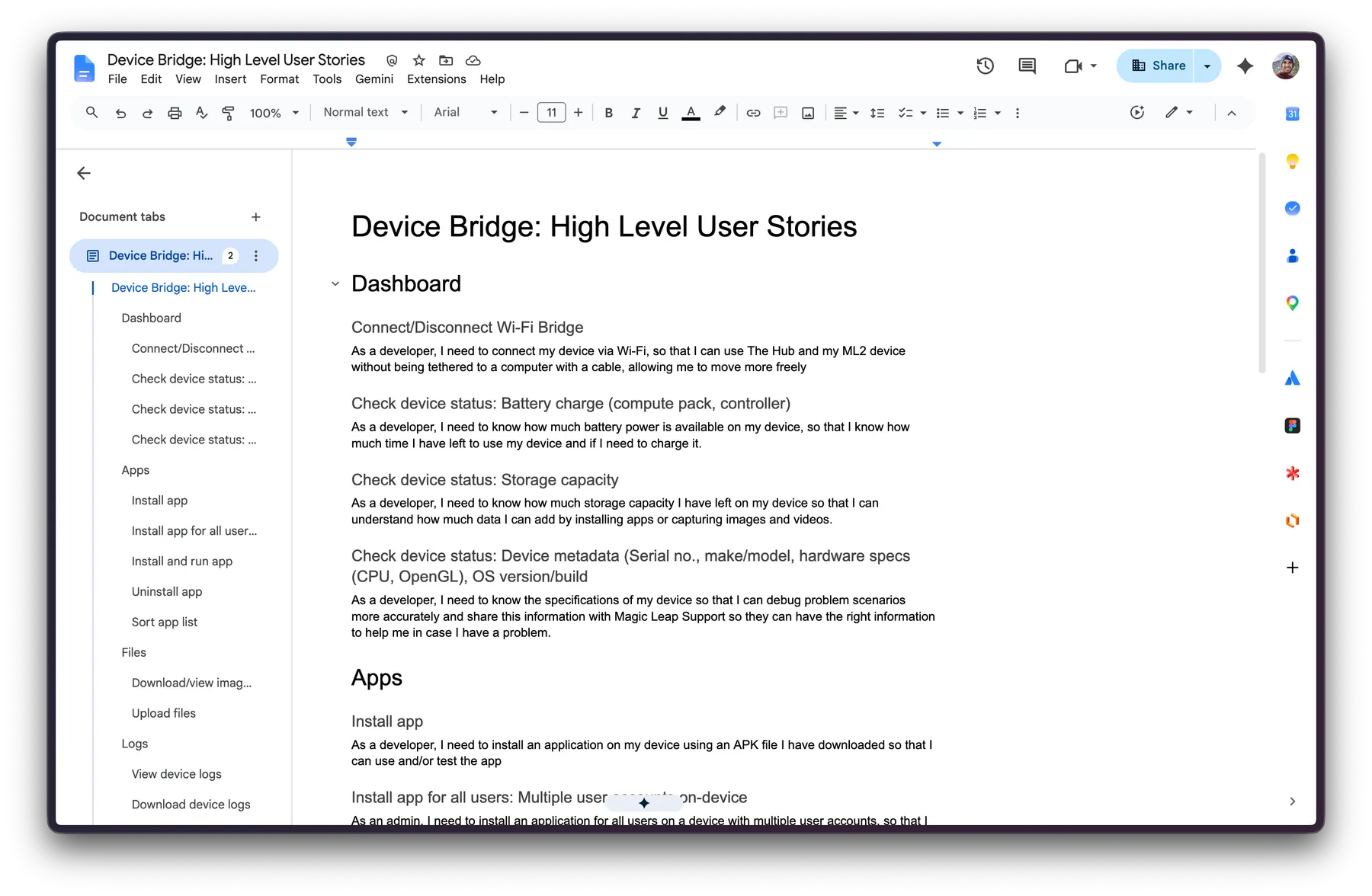
This workshop provided a focused place where Product, Engineering, Developer Relations, Design, and QA, spread across US and European time zones, could walk through every user journey, share feedback, and ideate solutions together. Engineering came in skeptical of sitting in a design conversation; they left some of the most engaged voices in the room.
"You have a remarkable ability to present and explain design concepts in a way that even non-UI software engineers would understand."
Konstantin Sakhin, Principal Software Engineer, Magic Leap
Outcome
The outcome of this alignment effort is my most proud moment as a designer at Magic Leap. By bringing my partners into my design process, encouraging them to participate and drive direction as one team rather than as conflicting stakeholders, we walked away with an aligned direction, a series of compromises, and a prioritized roadmap. We certainly didn't solve every problem during this workshop, but the foundation of trust and collaboration that was forged during this time would carry us through the challenges to come.
Compromises
Yes, and...
Allow users to connect multiple devices and quickly move between them from a global perspective.
Not right now
Further evaluation is required to understand the trade-off between usability risk and user value.
Two explicit experiences
Impact on end users and the complexity introduced by combining Stream and Capture outweigh engineering benefits.
Native file management
New engineering scope is required for both and a native file manager provides a holistic solution with additional value that a mounted device can't offer.
Unexpected value
Additionally, this workshop allowed us to discover an opportunity that likely wouldn't have been identified until after the public release of Hub 3, which would add value for the whole Product Development organization. During the user flow walkthrough of our OS installer experience, one of our QA engineers raised the idea of providing internal nightly builds through this interface to speed up QA feedback cycles.
By doing this, anyone at Magic Leap could install the latest OS build on their device without having to access builds through Artifactory, our repository for internal builds, which often caused permission issues and was time consuming for everyone to use. The team agreed this was a valuable addition, and I worked with Engineering to design and implement this feature quickly. We launched the new experience prior to the Public release of Hub 3, which helped us move even faster towards our launch target. This improvement is further proof of the power that collaborative teams can have on an organization.
Recognition
As part of Magic Leap's go-to-market strategy for Hub 3, the Product Marketing team asked me to be the on-screen talent for the Hub 3 launch walkthrough that would be shared on the company's developer YouTube channel. For someone who joined Magic Leap as an outsider to spatial computing, this showed that the trust I'd built extended well past the Design team.
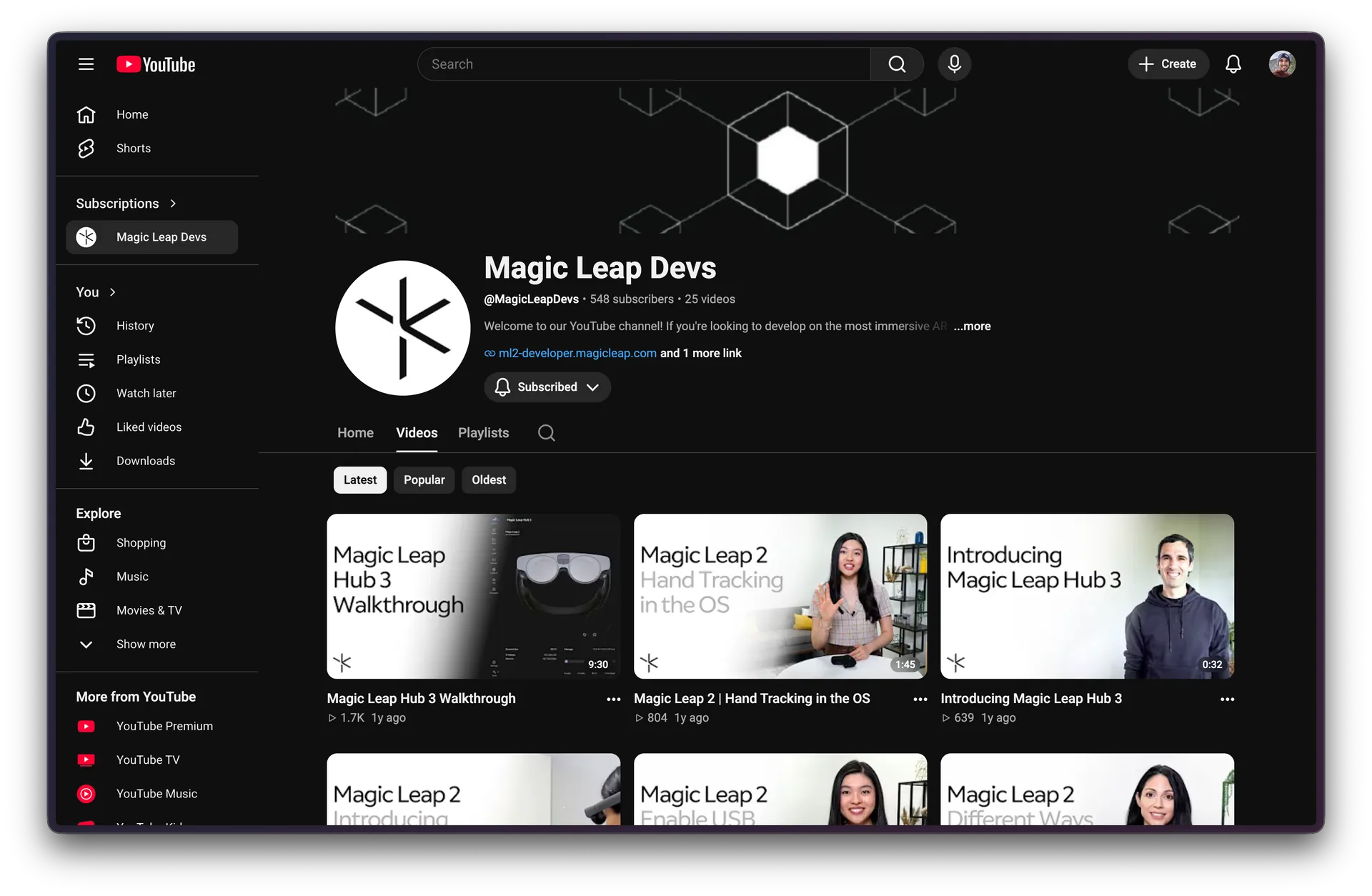
The Hub 3 launch was a success, and the feedback from developers and partners has been overwhelmingly positive. Tindrum and RoundTable, Amazon's AR training partner, told us the new layout made packages and capture far easier to navigate. Amazon's own onsite engineers said that pulling bug reports and device data was much faster and more intuitive than before. In The Hub's previous version, users would mistakenly capture bug reports for The Hub app instead of the Magic Leap device they were working with, which caused issues for support teams and slowed down problem solving both internally and externally.
After sharing my process and these outcomes with my manager, I was asked to present my work to the entire design organization. My work impacted the whole team and the workshop model I designed and executed has been adopted across the design organization.