Building a simple way to protect and optimize data resources for the enterprise.
Igneous is a middle-stage startup company working to simplify the storage, backup and accessibility of data for enterprise organizations.
My Role
I joined Igneous early in their product development journey and took the opportunity to help build a user-centered product experience from the ground up. After transitioning ownership of design processes from a consulting design firm, I worked with a principal UX designer and together we defined customer experiences driven by data and lean design practices.
Design tenets to guide our decision making
-
Advocate for the user across the organization
It's important for everyone to understand that we are working to better the lives of real people.
-
Challenge our assumptions
We don’t assume to have already developed the perfect solution; therefore we routinely leverage the user-centered design process to continuously uncover unmet customers needs in order to deliver experiences with meaningful value.
-
Collaborate to make connections and drive actions
Our work doesn’t end with wireframes and mockups; we take ownership for ensuring that relevant teams are aware of customer insights and ensure that owners are assigned to drive actions where issues require attention.
-
Data drives our product from done to delightful
We put emphasis on learning from what we design and launch by using quantitative data and research insights rather than common assumptions to define meaningful delight and to continuously raise the bar.
-
Constantly learning to be better today than yesterday
We serve our customers best when we stay current with new technologies, devices, and interactions to maintain our position as the best UX design subject matter experts.
Research and discovery
An intimate understanding of people and problems is essential in creating impactful experiences.
To begin, I paired with the consulting design team to understand the foundation they had laid with stakeholder interviews, persona development, user stories and wireframes.
I then began series of my own research activities to gain a deeper understanding of the problem space and people involved. I collected qualitative and quantitative data by conducting user interviews and journey mapping sessions with representatives of our key persona, an enterprise storage systems administrator, and industry veterans in enterprise data storage and infrastructure.
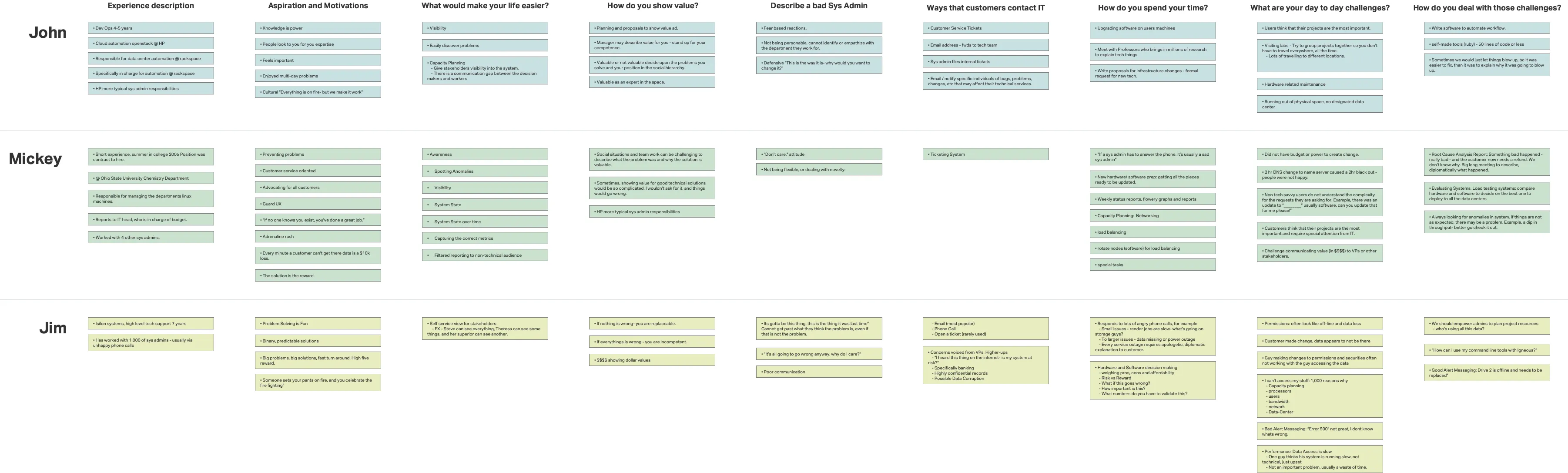
Life as a storage systems administrator is a frantic balance between supporting end-users and fighting to prevent problems.
Through these conversations I discovered that the current life of a storage systems administrator is a constant stream of interruptions from their end-users and responding to high priority issues to resolve problems with data accessibility. Using insights from the interviews, I conducted a card sorting exercise to clarify our persona's pain points and motivations. Afterwards, I worked collectively with the participants to build an affinity map, identifying common themes and areas of focus that I could organize and take action on.
UX aspirational themes
-
The job of a sys admin is reactive but the dream job is proactive (identifying vulnerability, planning, and preventing).
-
Even though they hate some aspects of their job, sys admins love what they do and care deeply.
-
Steve works to be an enabler - allowing everyone to succeed as he works behind the scenes.
-
Permissions are difficult, when they're not correct everything looks broken.
-
Not having visibility into on how customers are using resources and what resource needs are upcoming is painful.
-
Perception is difficult to quantify for different audiences, executive staff and end-users think about storage differently.
-
High performance storage resources are expensive and difficult to optimize for rapid data growth.
Vision
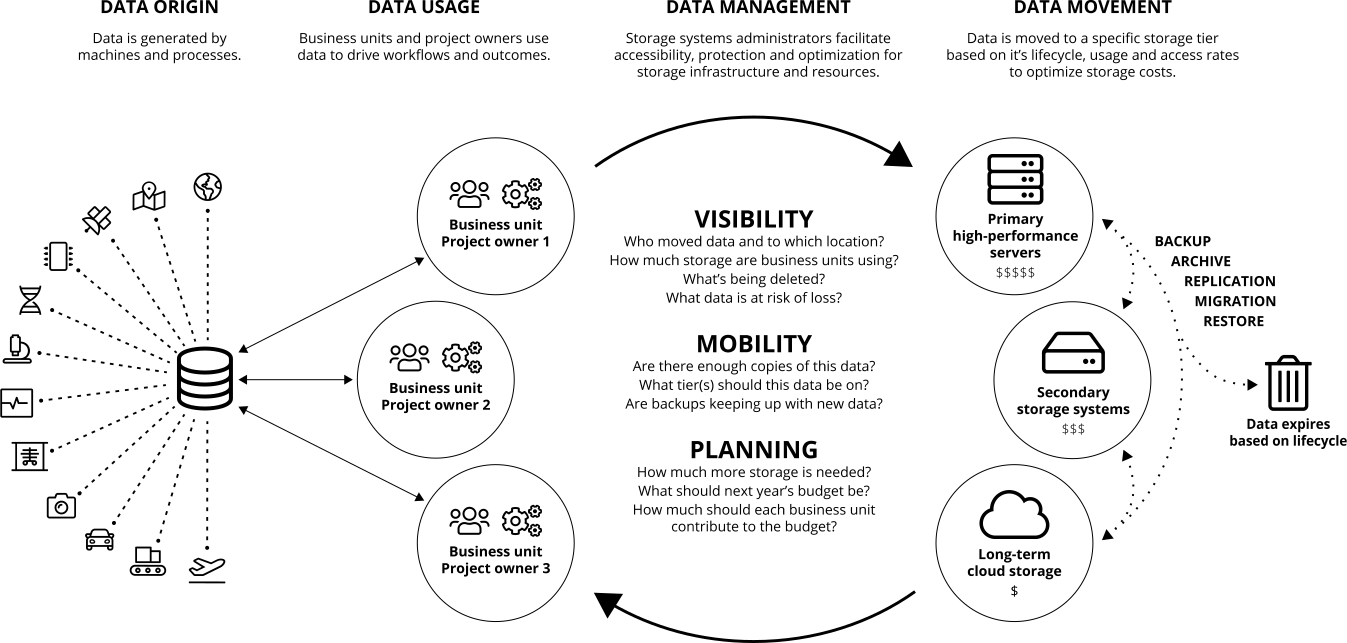
Storage systems administrators need to understand how their resources are being used now and in the future, so they can optimize them to support data-centric workflows while maintaining a budget and reducing on-premises storage costs.
If data is not being used, accessed or modified, it can often be stored cheaply off-premises and recalled as needed.
Product strategy
To help clarify what my research meant in relation to product and business goals at Igneous, I hosted a series of workshops with executive leaders from marketing, product and engineering, including our CEO, to define a concise product strategy that supported specific end-user goals. We worked collaboratively to construct a customer journey map outlining key experiences addressing user needs while supporting business goals.
User flows
With a clear customer journey, product strategy and buy-in from the executive team, I was able to dive deeper into the user experience. I broke down the large user goals defined in the strategy workshops into more granular user stories and organized them into high-level user flows that connect a series of actions, resulting in an end-user achieving their goal.
Information architecture
Focusing closely on specific stories allowed me to understand the questions to be answered and relevant data points to move the user through each experience with success. With this data, I created an information architecture for each key experience. These diagrams also functioned as high-level wireframes to inform the next design iterations.
Rapid ideation
While working through the user flows and information architecture, I generated ideas quickly with pencil and paper to get my thoughts into visual notes. Using these sketches I collected feedback from the product team and UX engineering to help me understand viability and feasibility of the design direction and made adjustments as needed.
Testing assumptions and iterating
As I worked through the first design iterations, I took time to conduct usability tests with my colleages using paper printouts and interactive prototypes. I created a test plan and worked with a candidate to step through how they might achieve a specific goal using the tools provided in front of them. I specifically wanted to understand how people percieved language, as technical jargon can mean different things to different people, and interaction patterns to ensure that the product was intuitive and usable. This was a very iterative process and I would make small adjustments to the prototype and test again with another candidate, while keeping Mr. Steve Green (our key persona) in mind.
Using all of information gathered from my research and usability tests, I produced an early prototype for an emerging product, DataDiscover, to test with early customers. Their feedback would help verify our assumptions of understanding data age and location to inform decisions about data and storage resources.
Through these conversations and demos we discovered four primary metrics that drive decision making for data and storage optimization – file accessed time, file modified time, growth rate and total size of data . These findings validated the use case of identifying and moving large, aged data sets to a cheaper storage location, such as a secondary tier on premises or a cloud storage vendor, like AWS, Microsoft Azure or Google Cloud Platform. With confidence in our design direction, I was able to greatly simplify the user experience and drive focus within the product vision.
Explorations in data visualization
Knowing the scale of enterprise data, scannability a primary concern as I worked through these data dense experiences. Our users needed to quickly scan large amounts information, while being able to identify patterns or anomalies to make decisions. Finding the right way to visualize data was critical to developing a clean and concise experience.
The solution
Design for the future and compromise to deliver value
Balancing what's technically feasible with what is desirable to end users and viable for the business is always a conversation. I lean towards continuously releasing simple experiences that deliver value to the end-user and while making trade-offs with stakeholders by prioritizing future improvement opportunities.
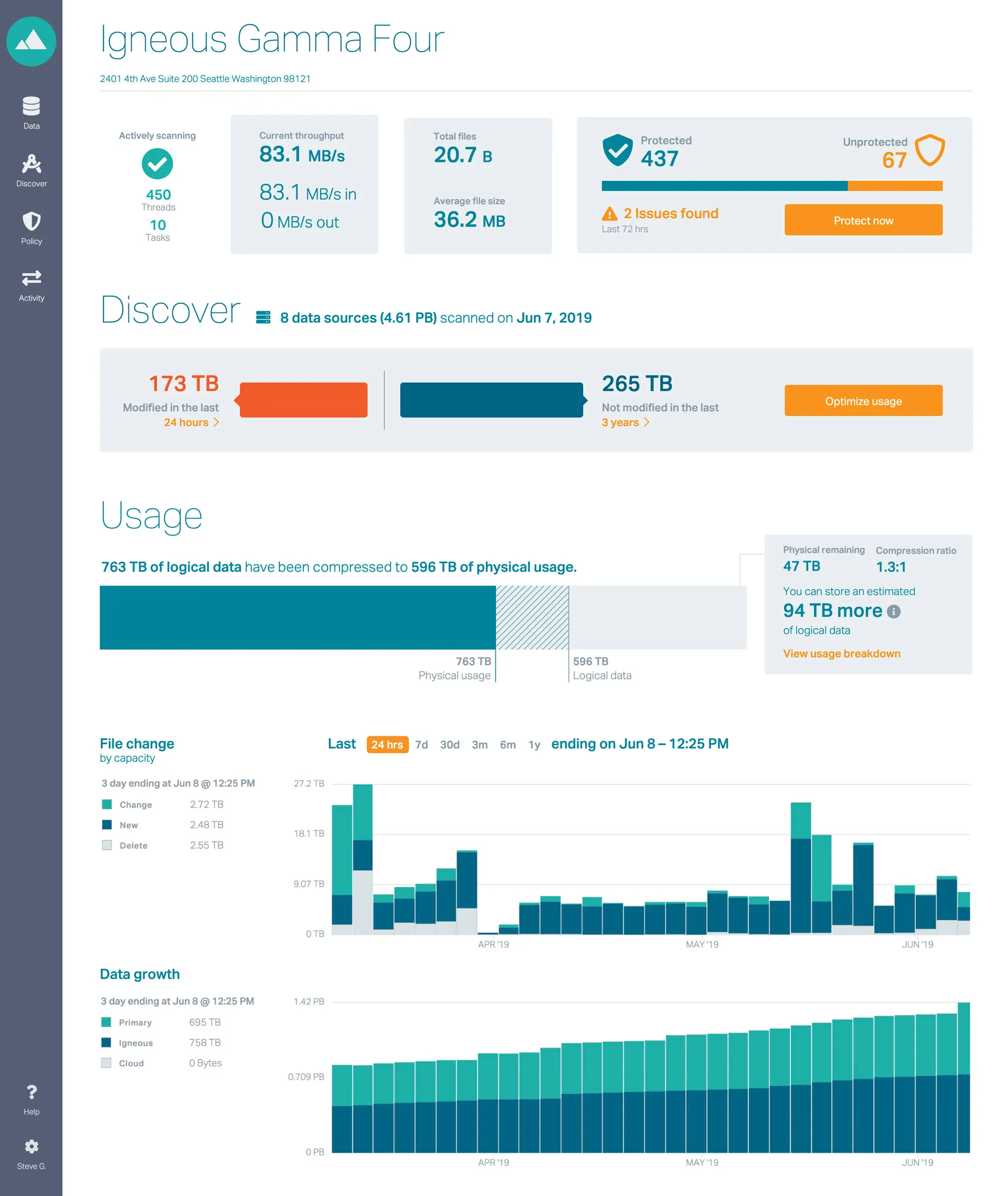
Dashboard
Future design mockup
At a glance, communicate the state of data protection, highlight vulnerability and provide actionable insights into storage and data usage that save time and money.
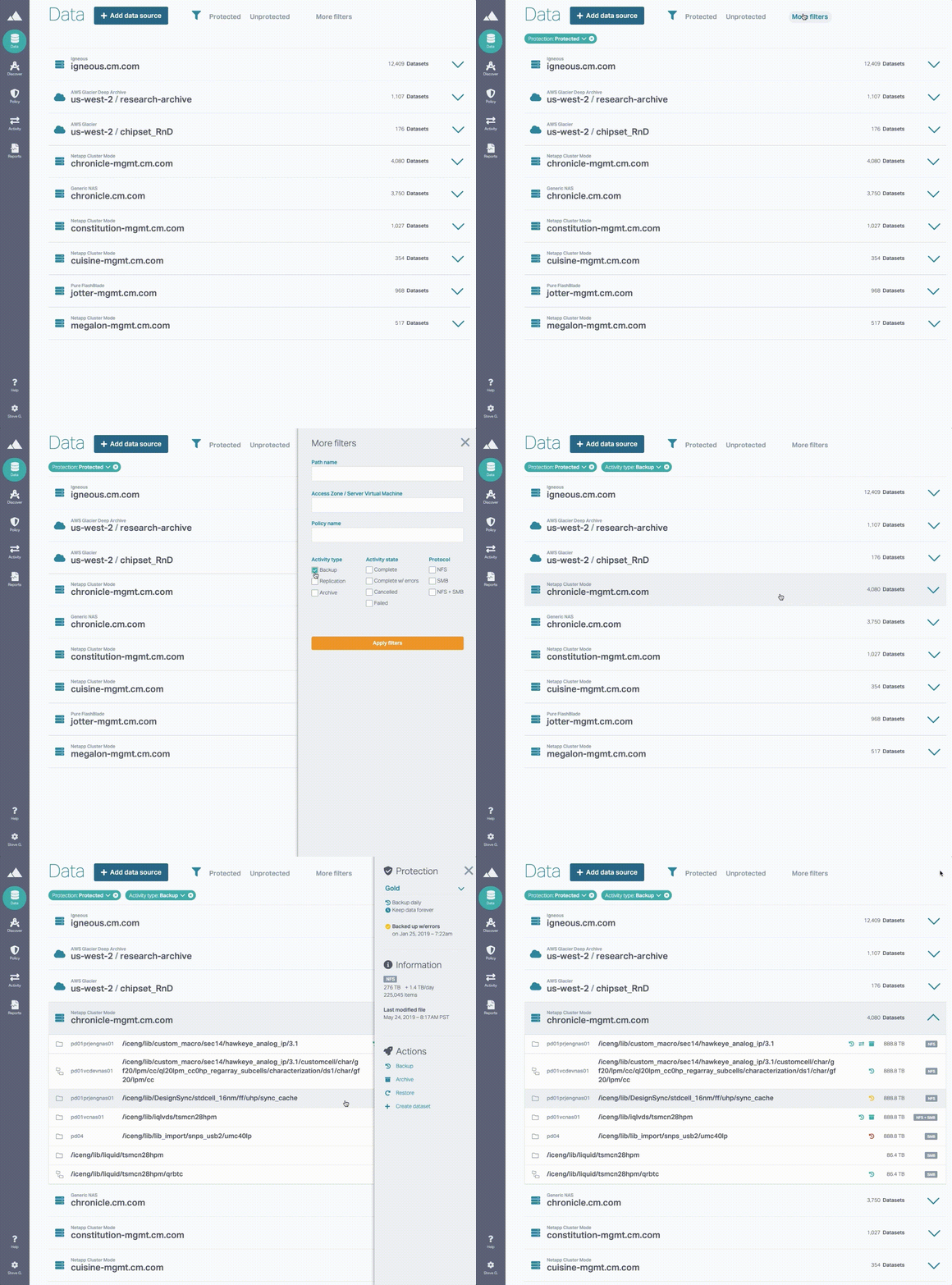
Data
Interactive prototype
A holistic view of data and system architecture that is scalable for the enterprise and powerful, with the ability to take broad or granular action.
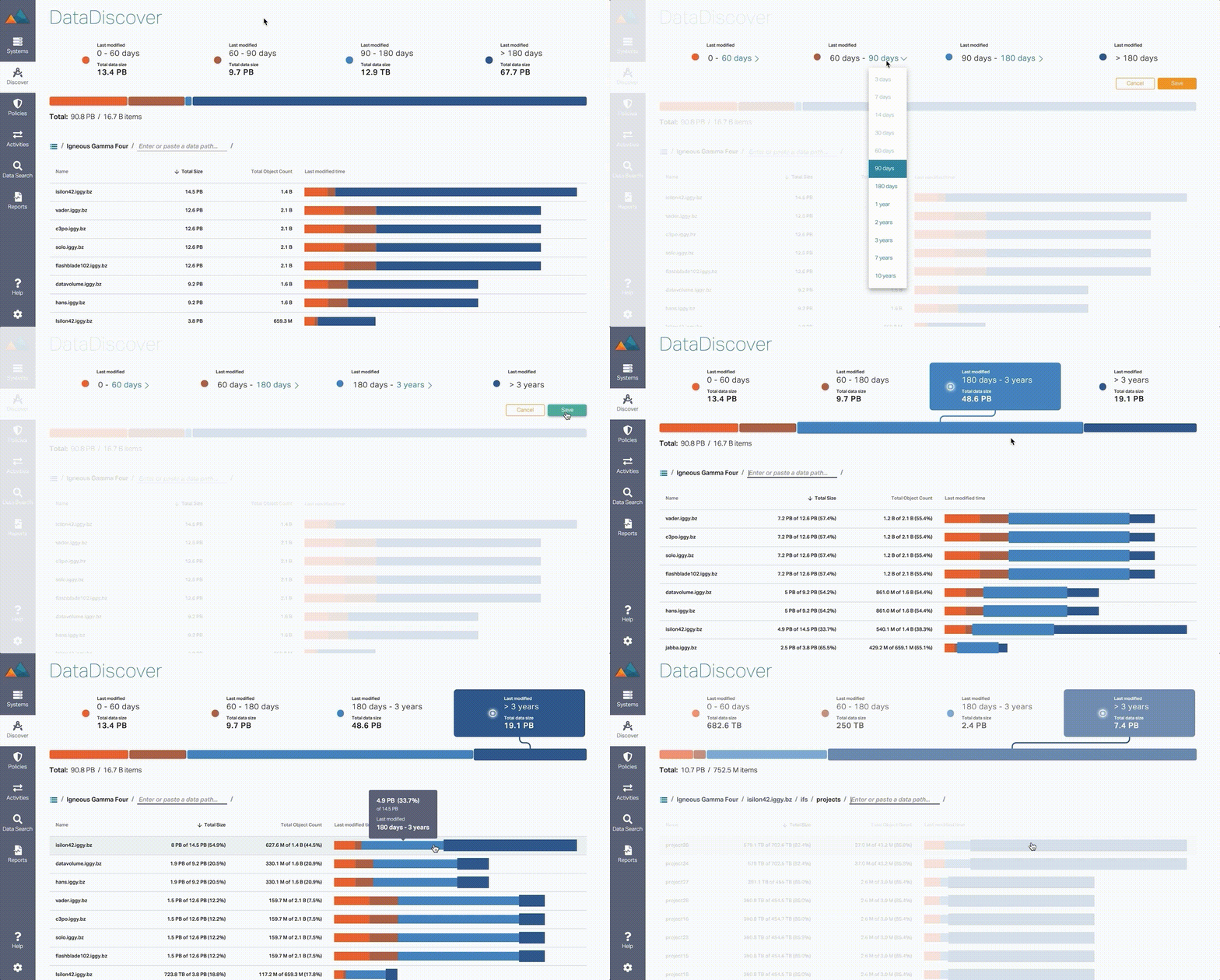
Discover
Shipped product
Provide unified visibility into the lifecycle of data, fleet-wide across all storage systems, locations and geographies.
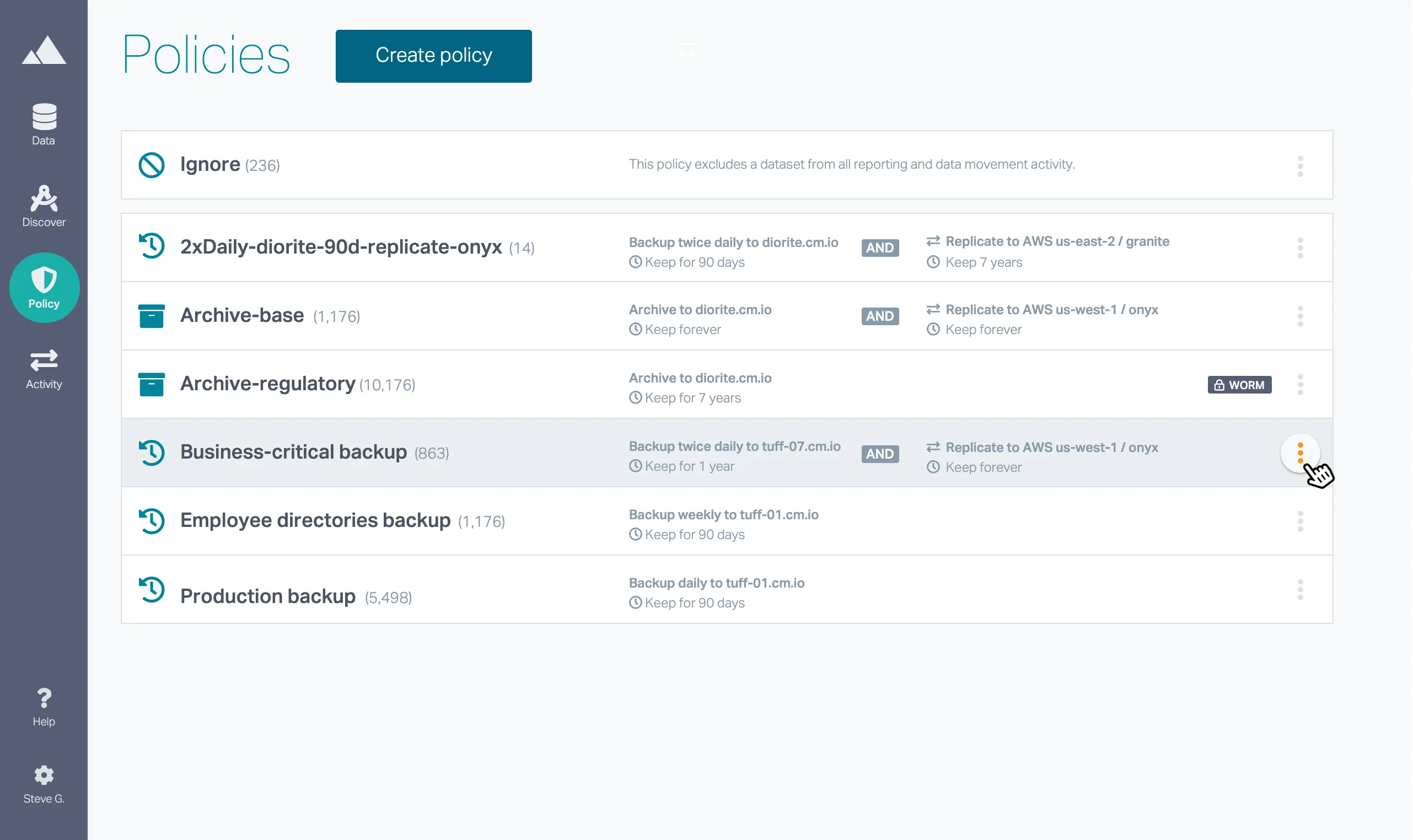
Policy
Future design mockup
Flexibility in data movement and governance with the power of a rule based paradigm.
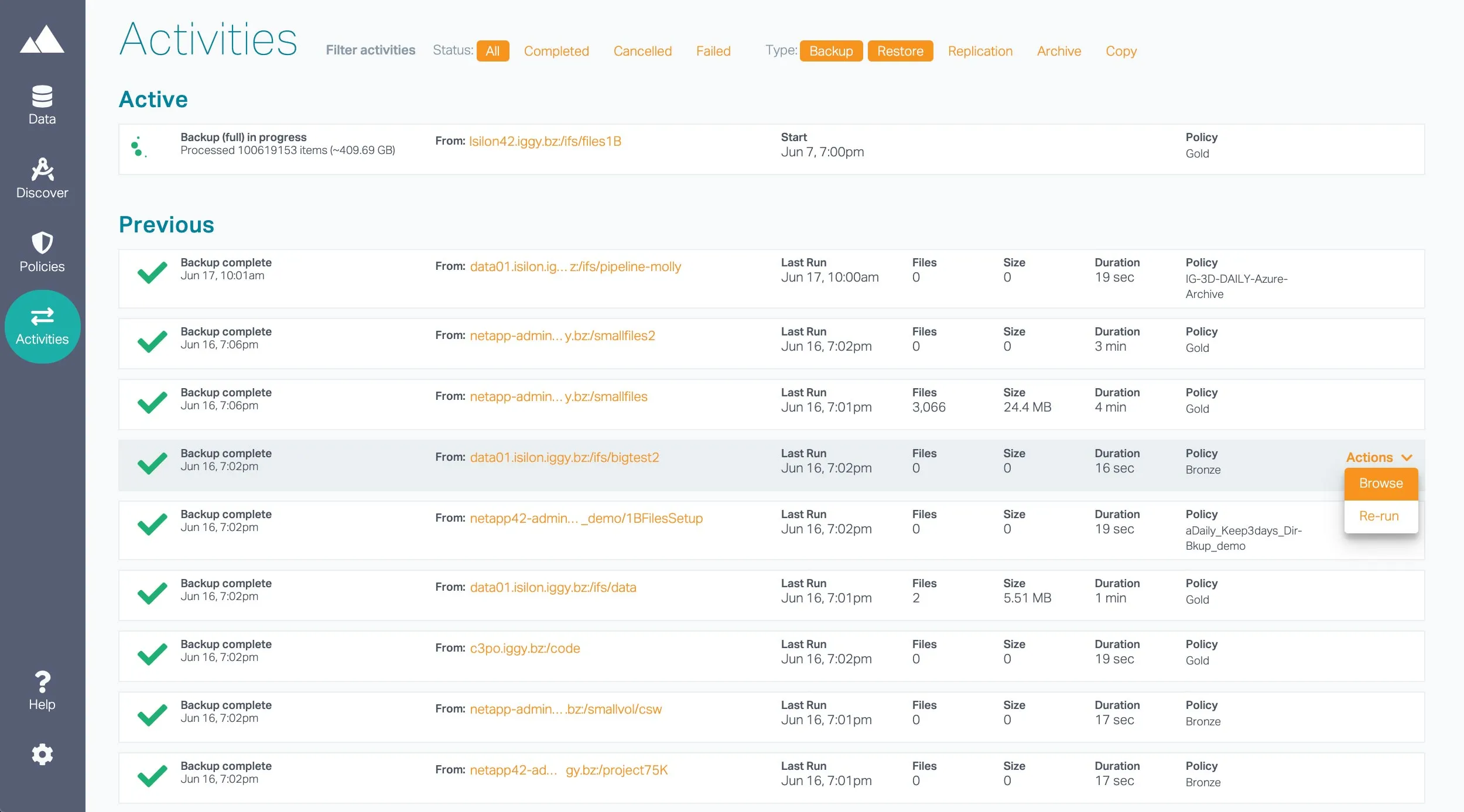
Activity
Shipped product
Auditable insight into how data is moving now and in the past.
Customer response
“DataDiscover unlocks massive increases in productivity and innovation by enabling engineers, researchers, and scientists to explore and find their data in seconds rather than hours or days.”
Grant Tomlin
Account Executive, InterVision Systems
“We needed an enterprise-class solution. We needed it to be easy to manage, scalable across multiple NAS platforms, cloud-friendly, and we needed it to perform.”
“My engineers are very happy with Igneous. The ability to search across millions, if not billions of files is huge. The Igneous solution definitely improved our ability to do our job.”
Carl Lucas
VP of Information Technology, Quantum Spatial
"My interpretation of success is, nobody has escalated anything to me yet. It’s an elegantly, outstandingly simple solution."
Sanjay Das
Partner & Chief Operating Officer, Tippett Studio